Agent experience is how AI agents use your public surfaces to finish a task. Not how a chatbot sounds. Not how a support rep feels about their queue. Whether software acting for a person can complete a job with what you already publish.
If that sentence sounds small, good. The term gets inflated fast. Keep it tied to a finished task or it turns into another word for "we added docs."
A definition you can use
Agent experience (AX) is the quality of the path an agent takes across the public surfaces of your product when it tries to complete a job for someone else.
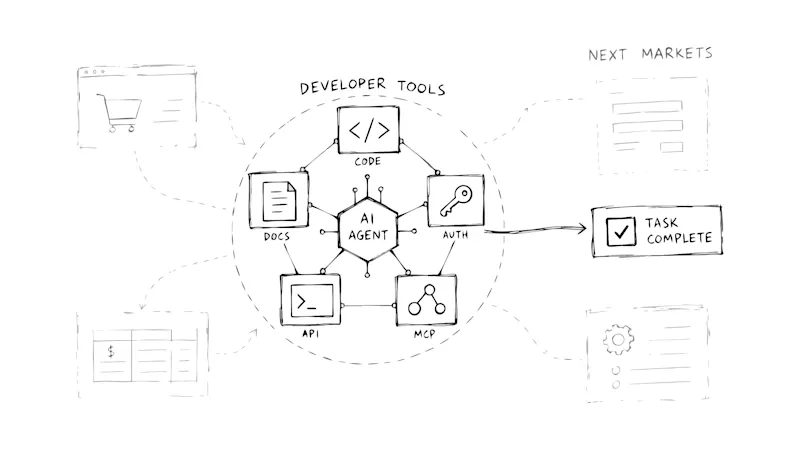
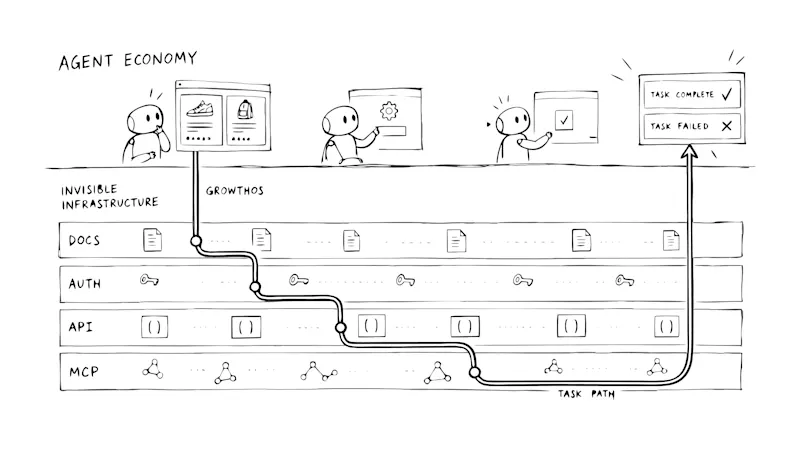
Public surfaces means anything an outside agent can reach without a sales call: reference docs, examples, token endpoints, error bodies, schemas, and any tool interface you expose. The agent reads those, acts, and either finishes or stops.
I keep hearing AX used for how human support agents feel about their tools. That is a workplace term. The version I mean is narrower: can an agent finish a job on your product without a person sitting in the loop.
This only matters because software now has a class of user that is not a person. Once that is true, "experience" cannot mean screens and delight. It means a next action that is legal, obvious, and recoverable when it fails.
Why the word showed up now
Developers have sent scripts at your API for years. Those scripts were brittle on purpose. A person wrote them, watched them, and patched them.
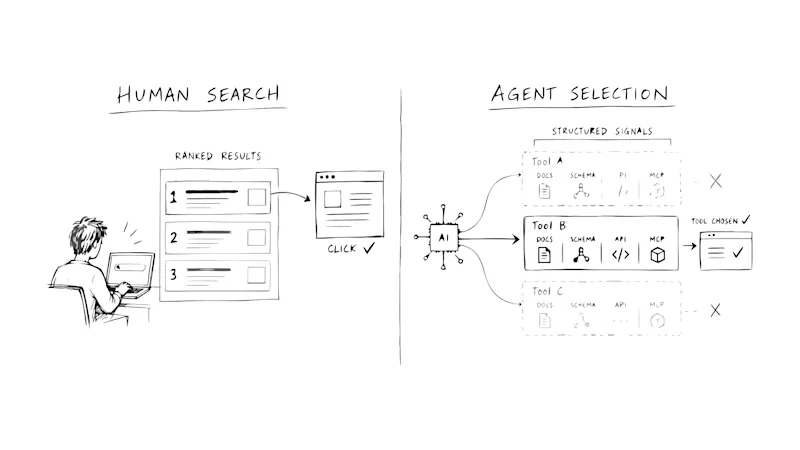
Agents are different in one practical way. They choose the next call from whatever they can parse. They do not open a ticket when the parse is wrong. They retry, guess, or switch vendors. The person who sent them sees a working snippet from someone else and moves on.
That is why AX is not a rebrand of SEO, and not a rebrand of "write better docs." Search is about being mentioned. AX is about being usable after you have been found. Plenty of products are easy to name and hard to complete.
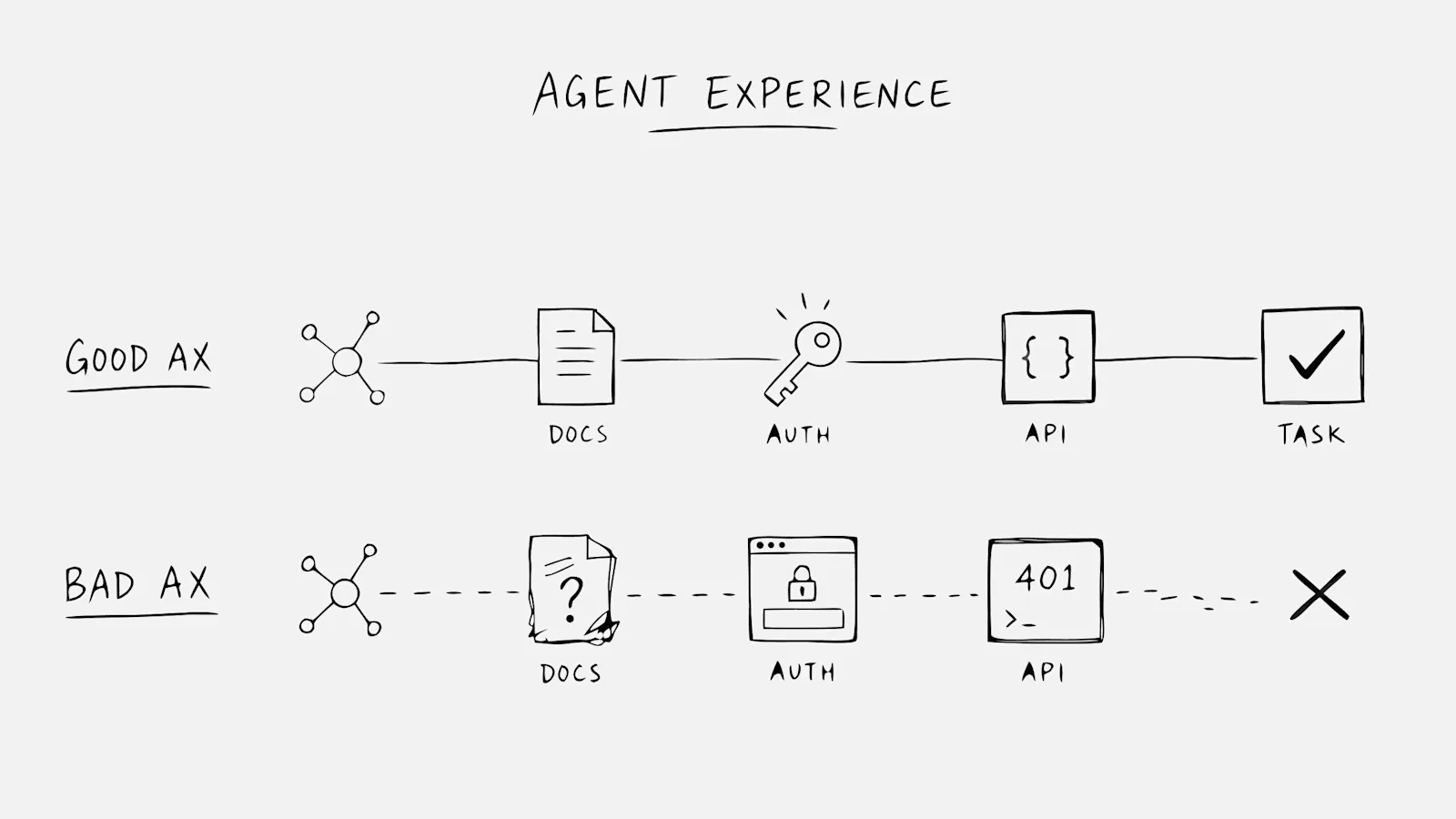
You do not need a protocol debate to start. If an agent can obtain a credential, make the first real call, and tell success from failure, you have a baseline. If any of those steps require a pair of eyes, you have a human product with machine traffic leaking through.
The word is useful because it gives that gap a name. Without a name, teams argue about copy, bot scores, and "AI features" as if they were the same work. They are not. AX is the work of making a public path completable for software you did not write.
DX vs AX
Developer experience is still about a person. A person can infer, ask Slack, and forgive a missing example. Agent experience is about software that cannot infer on your behalf.
Developer experience | Agent experience | |
|---|---|---|
Who you design for | A person reading and trying | Software acting for a person |
What "good" feels like | Fast first success, less swearing | A finished job without a babysitter |
What stuck looks like | A question, a ticket, a workaround | A retry, then another vendor |
What you change | Tutorials, SDK ergonomics, UI | Parseable reference, recoverable errors, a non-browser path |
Feedback you get | Opinions and complaints | Success or silence |
Customer experience still matters. Humans still churn, still love brands, still forward invoices. AX does not replace that. It sits beside it for the user who will never fill a survey.
If your DX is strong and your AX is weak, people who sit down with your product do fine. The ones who send an agent never sit down. You will hear that the docs are clear. They are, for a person. That is the trap.
The feature-flag install that died on "invalid request"
A coding agent in Cursor tried to add a feature-flag SDK last week for a teammate who did not want to leave the editor. The docs were fine for a human. There was a screenshot of the dashboard and a sentence that said pass the project ID.
The agent created a flag, then posted without project_id. The API returned 400 Invalid request. No field. No example of the missing shape. The agent guessed project, then projectId, then workspace_id. Three 400s. It opened a second vendor's docs, found a typed example, and finished there.
That was the whole AX review. Nobody hated the first product. The path was not usable for the user who showed up.
A human would have scrolled up, seen the screenshot, and copied the ID. The agent did not have that move. Your DX score can stay high while this happens every afternoon.
What good AX is, without a tour
You do not need a four-stop map of every surface. You need a finished job.
The path has to be readable without a screenshot. Parameter names in the prose should match the request. Examples should be copyable, not decorative. If a field is required, say so in the same place the agent will look, not three headings up.
The path has to survive a wrong first call. Invalid request is a wall. Missing project_id; see /docs/projects is a door. Agents are not fragile because they are dumb. They are fragile because they will not phone you.
The path has to work without a browser when the job is programmatic. If the only way to mint a token is a consent screen, you have decided that this user is not welcome. That can be a real security choice. Call it a choice. Do not call the leftover 401s unexplained.
Good AX is boring when it works. The agent completes the task and nobody writes a blog post about your docs. The person who sent it never learns your brand story. They learn that the call succeeded.
What AX is not
It is not bot management. Bot management asks whether traffic is hostile. AX asks whether wanted traffic can finish. You can block scrapers and still fail the agent a customer sent.
It is not a personality for your assistant. Tone, avatar, and "helpful" copy are product design for humans. An outside agent does not need to like you. It needs a legal next call.
It is not a ranking trick. Getting named in an answer engine is distribution. AX starts after the name, when the agent tries to act.
It is not a score you invent from pageviews. Sessions were a proxy for people. Agents do not owe you a session.
If you want one number later, Agent Task Completion Rate is the share of started agent tasks that finish. Measure the task, not the visit — that is the analytics problem, not the definition.
Who feels this first
API-first products feel it first because the work is already a call. Developer tools feel it first because coding agents live in the same loop as install and integrate. Other categories will feel it when procurement and research agents stop summarizing and start submitting.
You do not have to be "an AI company." You have to have a public surface an agent can touch. Most of you already do. A billing API, a docs site, a status page with copy-paste curls: those are enough. The agent does not wait for your roadmap label.
If you only improve the human tutorial, you will keep hearing that DX is fine. It may be. AX is the other test, run by something that will not stay to compliment the tutorial.
Frequently asked questions
How is agent experience different from bot management?
Bot management is about allowing or blocking automated traffic. Agent experience is about the automated traffic you want: software finishing a real job for a person. One is a gate. The other is whether the path behind the gate works. A perfect WAF and a useless 400 can coexist.
Who should own agent experience?
Own it where the public path is already owned. That is usually DevRel, platform, or developer experience, with security holding the credential rules. Product should care because this is conversion, not a docs hobby. If nobody owns the leftover 401s, you do not have an AX owner. You have a gap.
AX is a short word for a blunt test. Can an agent finish the job with what you publish, or does it need a human you will never meet?