Website traffic used to be a decent stand-in for demand. Sessions up meant interest up. That shortcut is breaking.
I still open the weekly session chart first. Last month it was down 18%. Pipeline was not. Overnight the gateway issued keys for a workflow that never touched the homepage. The chart and the demand had stopped describing the same thing.
You can keep reading traffic. You cannot keep treating it as the market.
Traffic used to stand in for interest
For a long time the proxy was fair. A person heard about you, searched, landed, clicked, and maybe talked to sales. Each of those steps left a visit. If you sold through a website, the website was where demand announced itself.
Product analytics got very good at that path. Sessions, sources, pageviews, a form at the end. When the curve bent, someone launched a campaign or blamed seasonality. The unit felt honest because the buyer and the browser were the same actor.
That world did not vanish. Plenty of buyers still arrive as people. The mistake is assuming they are the whole demand story, or even the leading indicator, for an API-first product.
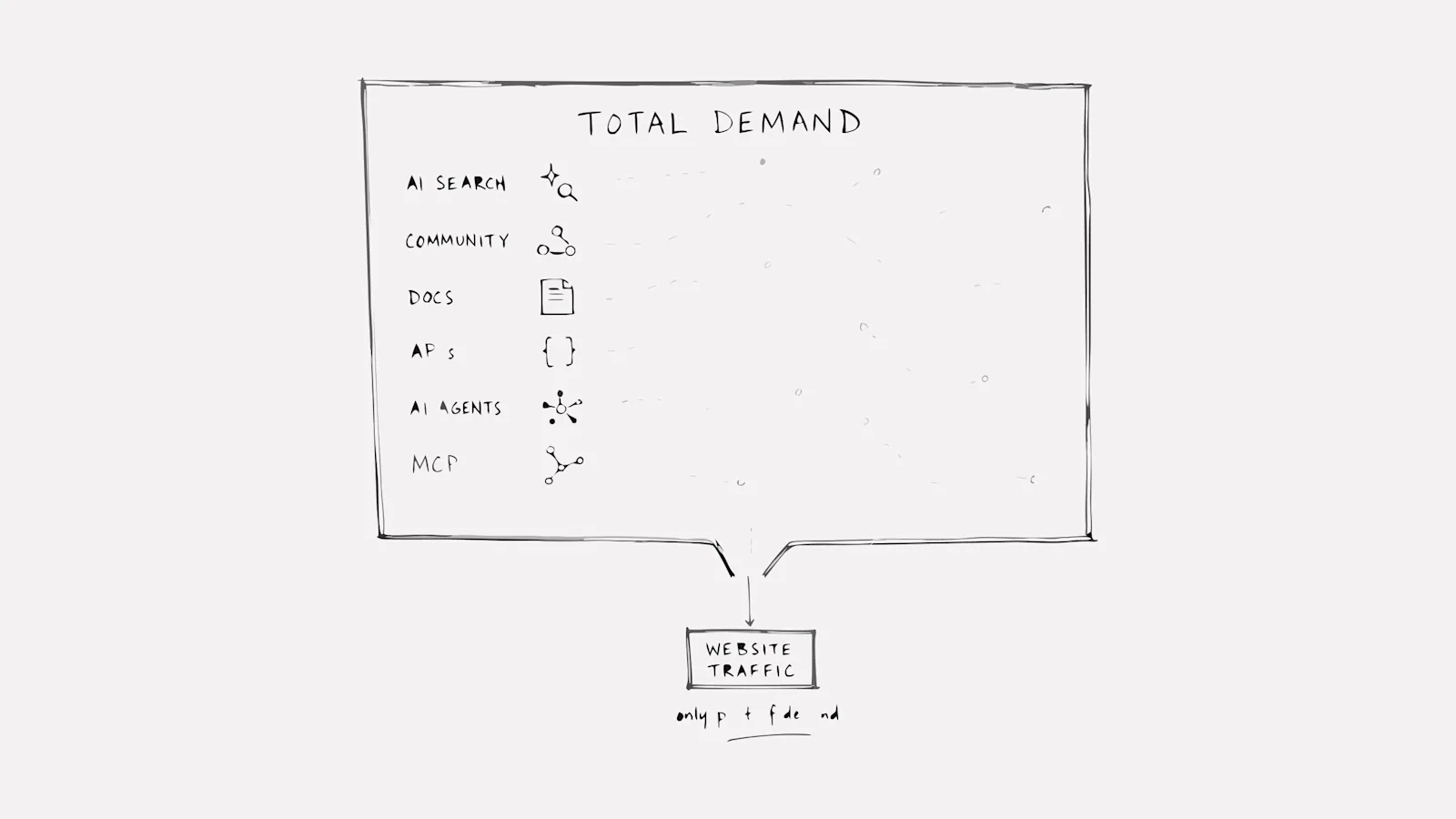
Traffic is a count of visits you were in a position to record. Demand is whether someone is trying to get a job done with you, or with a substitute, whether or not they rendered your marketing site.
Those used to move together. They do not have to anymore.
Demand that never becomes a visit
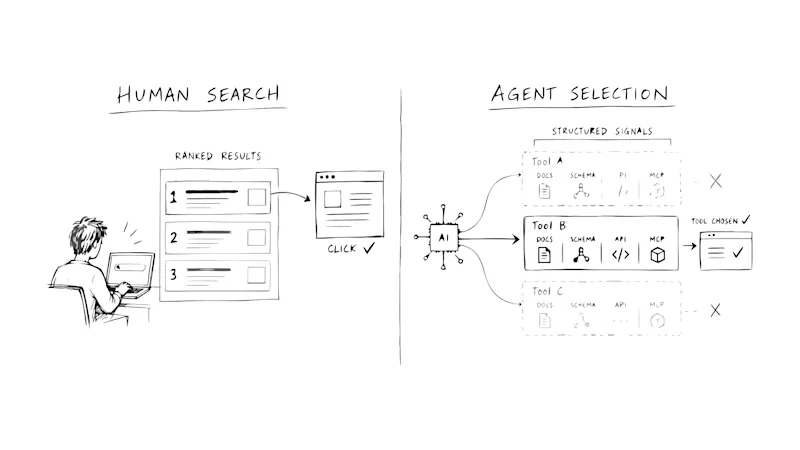
A lot of research now ends before a click. Assistants summarize vendors. Search overviews answer "best usage billing API" without sending the reader to anyone's homepage. The person can shortlist you from a paragraph they never attribute.
Communities do the same work off-site. A Slack thread, a Reddit comment, a GitHub issue comparing webhook signatures. The decision can be mostly made before your first recorded session. Sometimes it is made and you still get a visit, which makes the visit look like the cause. It was the receipt.
Zero-click is not a moral failing of SEO. It is a change in where attention resolves. If you only watch sessions, a rise in off-site answers looks like a demand slump. It might be the opposite: more people got an answer that included you, and fewer of them needed the site.
You will not fix that by asking the chart to be braver. The chart is doing what it was asked: counting recorded visits.
Agents and APIs were never a session
The sharper break, for developer products, is the buyer who never owed you a browser.
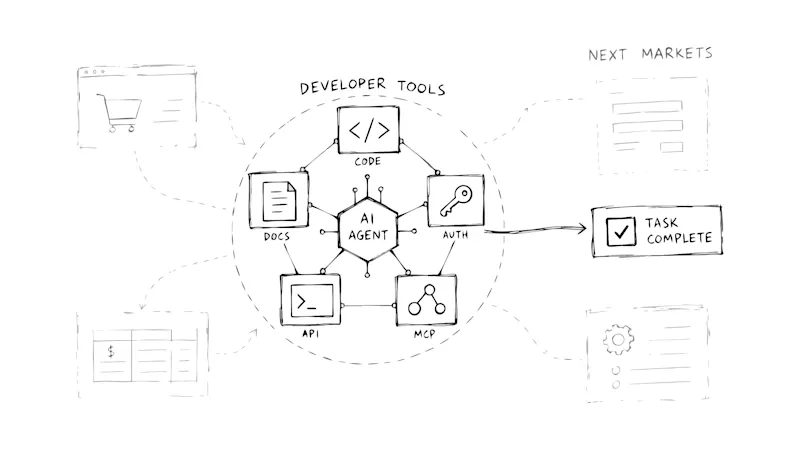
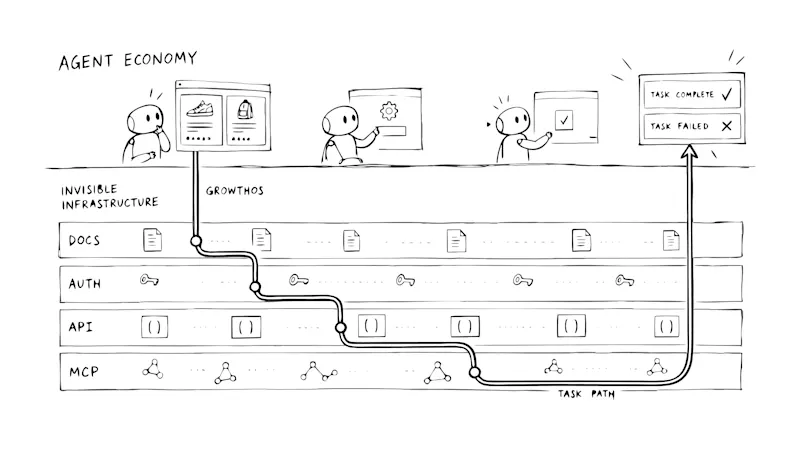
An agent can evaluate you from a spec, a docs fetch, or a tool call. Your next customer may never visit the homepage is not a slogan. It is a Tuesday. The human delegated "pick a provider and wire it." The work happens on machine-facing surfaces. The marketing site can stay dark.
API demand has the same shape even without an agent narrative. Partners hit /v1 from a server. A customer rotates keys. An integration runs overnight. None of that is a session in the sense your website tool means. If you fold it into "bot traffic" or ignore it because it did not view a page, you are deleting the part of demand that already pays you.
This is why falling pageviews can sit next to rising key creation. The site got quieter. The product got busier. A traffic-only readout calls that a problem. It is a measurement problem.
You do not need a lecture on bots to see it. You need to stop using the session count as a synonym for "people still want this."
What a healthy traffic chart still hides
A flat or rising traffic chart can hide shrinkage in the demand you care about.
Paid can refill sessions while qualified attempts move to assistants and APIs. A docs site can rack up human readers while agents bounce off an auth wall you never see in the same report. A launch can spike homepage hits and still lose the jobs that start in a repo.
The inverse is also true. A declining chart can hide a shift you should want. Fewer tire-kickers. More callers who already know the endpoint they need. Sales still files opportunities. You still tell the company interest is down because the session line said so.
I have sat in that review. The slide is green or red based on visits. The argument then becomes content or spend. Nobody asks how many jobs started off the site.
Pageviews remain a useful number for the pages you actually publish. They are a weak number for "is anyone trying to buy or integrate." Mixing the two is how teams ship another homepage section while the real leak is a credential flow no visitor ever sees.
Read traffic as a slice, not the market
Keep the website numbers. Change the sentence you attach to them.
Say: this is recorded human attention on properties we tag. Do not say: this is demand.
Then look at the slices the site cannot see. Off-site mentions and assistant answers, even if you only have a messy sample. Key creation, first successful authenticated call, partner volume. Inbound that arrives already decided. Those are demand fragments. They will not add up to one elegant chart. They will stop you from making a budget decision off a session dip alone.
When the question is what to measure instead of visits, use analytics built for agent users. This post is only the proxy breaking: zero-click research, agents, and APIs mean website traffic is a partial view. Treat it that way and the weekly review gets less theatrical.
The practical habit is small. Put the session chart next to one non-site number you already have. If they disagree, believe the disagreement. Do not average them into a vibe.
Demand did not disappear when the visit disappeared. It changed rooms. Your dashboard stayed in the first one.
Frequently asked questions
If sessions drop and revenue holds, did demand fall?
Usually no, or not in the way the chart implies. Revenue holding while sessions fall often means the remaining demand is higher intent, or it never needed the site. You can still have a top-of-funnel problem worth fixing. You should not diagnose it as "the market shrank" until you have looked at off-site research, direct integrations, and the jobs that start in APIs. A quieter website can be a quieter website.
Can API usage rise while website traffic falls?
Yes, and it is already common on API-first products. Servers do not browse. Agents do not collect a session cookie as a courtesy. Partners who are live will keep calling you after they stop rereading the homepage. If you treat that split as a contradiction, you will try to "fix" traffic while the product is doing the work. Read the two lines as different objects: attention you recorded, and jobs in production.